


Georgia’s position as a major transportation hub for the southeastern United States brings significant economic benefits, but it also creates serious safety challenges. With major freight corridors like Interstate 75, Interstate 285, and Interstate 85 cutting through the state, Georgia sees more than its fair share of truck accidents. For drivers sharing these highways with massive commercial vehicles, understanding the risks and knowing how to stay safe can mean the difference between arriving home safely and becoming another statistic.
The numbers tell a sobering story. From 2013 to 2023, truck accidents in Georgia increased dramatically, climbing from 19,555 crashes to 50,344 crashes. Even more alarming, truck-related fatalities rose by nearly 81 percent over the same decade, jumping from 142 deaths in 2013 to 257 deaths in 2023. These aren’t just numbers—they represent families torn apart, lives cut short, and communities forever changed by preventable tragedies.
The Geography of Danger: Georgia’s High-Risk Highway Network
Georgia’s highway system serves as a critical artery for commerce flowing throughout the Southeast, but this heavy commercial traffic creates significant hazards for everyday drivers. Interstate 75, which runs north-south through the heart of the state, carries an enormous volume of truck traffic between Michigan and Florida. This corridor alone accounts for more than 52 percent of all fatal crashes on I-75, with 11 particularly dangerous stretches totaling 75 fatal crashes and 78 fatalities across just 60.6 miles.
Interstate 285, Atlanta’s notorious perimeter highway, presents its own unique challenges. The four deadliest stretches of I-285 account for nearly 87 percent of all fatal crashes on that highway. East Point, located southwest of Atlanta, contains a stretch of I-285 that recorded 30 fatal crashes and 32 fatalities in recent years—the highest totals on the state’s most dangerous highway segments. The combination of heavy traffic, frequent lane changes, and the mixing of local commuters with long-haul truckers creates a perfect storm for accidents.
Interstate 85, running northeast from Atlanta toward South Carolina, shows particularly troubling patterns when it comes to impaired driving. More than a third of all fatal crashes on I-85’s deadliest stretches involve drunk driving, highlighting how alcohol compounds the already serious risks of sharing the road with large trucks.
Beyond the major interstates, Georgia’s rural highways present their own dangers. While these roads may seem quieter, they’re actually more dangerous in many ways. Rural roads typically have higher speed limits, limited safety infrastructure, and less frequent emergency response coverage. When a truck accident occurs on a rural highway, the consequences are often more severe due to longer response times and the higher speeds at which vehicles travel.
Understanding the Scope of the Problem
Large trucks—defined as vehicles with a gross vehicle weight rating over 10,000 pounds—make up only about 5 percent of all vehicles on Georgia roads, yet they’re involved in approximately 12 percent of all fatal highway crashes in the state. This disproportionate impact stems from basic physics: when an 80,000-pound truck collides with a 3,000-pound passenger car, the occupants of the smaller vehicle bear the brunt of the impact.
In 2022 alone, Georgia reported 1,797 total traffic fatalities, with large trucks playing a major role in these deaths. For every fatal truck accident in Georgia, there are typically 1.2 deaths, and in 83 percent of these crashes, the fatalities occur among occupants of other vehicles—not the truck drivers themselves. This stark reality underscores how truck accidents aren’t just dangerous for truckers; they’re exponentially more dangerous for everyone else sharing the road.
The timing patterns of these accidents reveal important insights about risk factors. Approximately 88 percent of non-fatal truck crashes and 84 percent of fatal crashes happen on weekdays, reflecting the heavy commercial traffic during business hours. However, 37 percent of fatal crashes occur at night between 6 PM and 6 AM, when visibility is reduced and driver fatigue becomes a more significant factor.
The Leading Causes of Truck Accidents in Georgia
Driver fatigue remains the single biggest threat on Georgia highways when it comes to truck accidents. Long-haul drivers often push themselves to meet tight delivery schedules, sometimes violating federal Hours of Service regulations designed to prevent exhaustion. These regulations limit drivers to 11 hours of driving after 10 consecutive hours off duty, but enforcement can be challenging, and economic pressures sometimes incentivize drivers to push beyond safe limits.
Electronic Logging Devices, mandated by the Federal Motor Carrier Safety Administration in 2017, have improved tracking of driver hours, but fatigue-related accidents continue to plague Georgia highways. The problem is particularly acute on routes like I-75, where drivers may have been on the road for hundreds of miles before reaching Georgia, already fighting exhaustion as they navigate through Atlanta’s complex highway system.
Brake failure represents another critical safety concern, accounting for approximately 29 percent of large truck crashes according to federal data. Commercial trucks use air brake systems rather than the hydraulic brakes found in passenger cars, and these complex systems require regular maintenance and inspection. When trucking companies cut corners on maintenance to reduce costs or keep vehicles in service longer, brake failures become inevitable.
The consequences of brake failure are particularly catastrophic on Georgia’s hilly terrain. In mountainous areas of North Georgia, trucks descending steep grades depend entirely on their braking systems to maintain safe speeds. When brakes fail on these inclines, runaway truck accidents can result, often leading to multiple fatalities and extensive property damage.
Mechanical failures extend beyond brake systems to include tire blowouts, which are a common sight on Georgia highways. Those strips of tire debris littering the roadway aren’t just unsightly—they’re evidence of maintenance failures that could have been prevented with proper inspection and tire replacement protocols. When a truck experiences a tire blowout at highway speeds, the driver can lose control, potentially jackknifing or rolling over.
Distracted driving has emerged as an increasingly serious problem as technology has proliferated in truck cabs. Cell phone use, GPS navigation, and even in-cabin entertainment systems can divert a truck driver’s attention at critical moments. Given that large trucks require much longer stopping distances than passenger cars—sometimes 300 feet or more at highway speeds—even a momentary distraction can prove fatal.
Weather conditions compound all these risk factors. Georgia’s climate brings sudden thunderstorms, occasional ice storms, and dense fog that can reduce visibility to near zero. Commercial drivers may feel pressure to continue driving in dangerous conditions to meet delivery schedules, but the combination of poor weather and a large truck’s inherent handling limitations creates extremely hazardous situations.
The Regulatory Framework and Its Limitations
The Federal Motor Carrier Safety Administration sets nationwide standards for commercial trucking operations, and Georgia enforces these regulations through its Department of Public Safety’s Commercial Vehicle Enforcement division. These regulations cover everything from driver licensing and hours of service to vehicle maintenance and cargo securement.
Commercial vehicles with a gross vehicle weight rating of 10,001 pounds or more must undergo annual inspections by qualified inspectors. Drivers must perform daily pre-trip inspections and maintain detailed records of their activities. Electronic Logging Devices track driver hours to ensure compliance with federal rest requirements. Vehicles carrying hazardous materials face additional regulations and insurance requirements.
However, enforcement remains a significant challenge. Georgia’s highway system spans more than 120,000 miles, and the state’s Commercial Vehicle Enforcement officers can’t monitor every truck on every highway. Many violations are only discovered after an accident occurs, when investigators examine maintenance records, driver logs, and vehicle inspection histories.
The economic pressures facing the trucking industry often work against safety compliance. Tight delivery schedules, fuel costs, and competitive pricing create incentives for cutting corners on maintenance, pushing drivers beyond safe limits, and taking other risks that endanger public safety.
Protecting Yourself on Georgia Highways
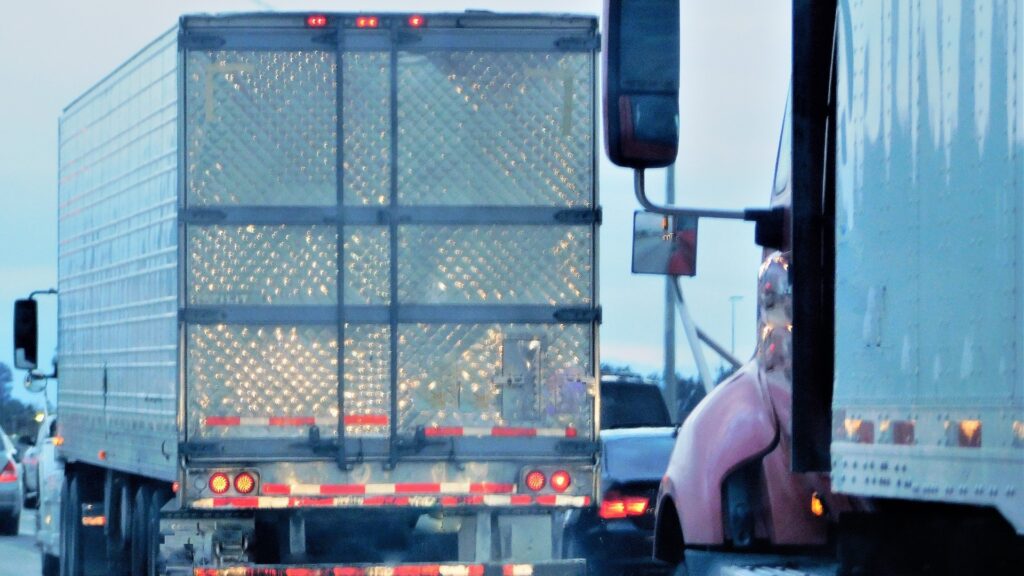
While drivers can’t control the actions of truck drivers or trucking companies, they can take steps to reduce their risk when sharing the road with large trucks. Understanding truck drivers’ limitations and blind spots is crucial for safe driving around commercial vehicles.
Large trucks have extensive blind spots—areas where the driver cannot see other vehicles even with properly adjusted mirrors. These “no zones” extend up to 20 feet in front of the truck, 30 feet behind the truck, and along both sides. The blind spot on the right side is particularly large, extending across multiple lanes. If you can’t see the truck driver in the truck’s mirrors, the driver can’t see you.
When passing a truck, do so quickly and decisively, always on the left side where visibility is better. Signal early, move into the left lane well before reaching the truck, and don’t linger alongside the vehicle. Once you’ve passed, don’t cut back into the right lane too quickly—ensure you can see the entire truck in your rearview mirror before returning to the right lane.
Maintaining adequate following distance behind trucks is critical. The general rule of thumb is to stay back far enough that you can see the truck’s mirrors. This provides several benefits: you’re out of the truck’s rear blind spot, you have better visibility around the truck to see potential hazards ahead, and you have more time to react if the truck needs to stop suddenly.
Never tailgate a truck. Rear-end collisions with trucks often result in “underride” accidents, where the smaller vehicle slides under the truck’s trailer. Even at relatively low speeds, these crashes are frequently fatal because the truck’s rear bumper strikes the passenger car at window level rather than at the reinforced bumper and hood level where safety systems are designed to absorb impact.
Be especially cautious around trucks making turns. Large trucks need extra space to complete turns, particularly right turns. A truck driver may swing left before turning right to avoid running over the curb or hitting fixed objects. Never try to squeeze between a turning truck and the curb—you could be crushed as the truck completes its turn.
Pay attention to road conditions and weather. If visibility is reduced due to rain, fog, or construction, increase your following distance and avoid driving in truck blind spots. In high winds, give trucks even more space, as they’re more susceptible to being blown off course than smaller vehicles.
The Human Cost and Road Ahead
Behind every truck accident statistic is a human story of tragedy and loss. The 257 people who died in truck-related crashes in Georgia in 2023 left behind families, friends, and communities grappling with sudden, preventable losses. The thousands more who were injured face long recoveries, mounting medical bills, and life-altering disabilities.
The economic impact extends far beyond the immediate victims. Truck accidents cost Georgia millions of dollars annually in emergency response, medical care, property damage, and lost productivity. Insurance premiums rise for all drivers as the frequency and severity of truck accidents increase.
However, there are reasons for cautious optimism. Georgia has plans to invest in truck-only lanes on major highways like I-75, which could reduce dangerous interactions between trucks and passenger vehicles. Expanded rest areas will give drivers more opportunities to take breaks and combat fatigue. Enhanced roadside inspection programs help identify dangerous vehicles before they cause accidents.
Technology offers additional hope. Advanced Driver Assistance Systems, including collision warning systems and lane departure alerts, are becoming more common in commercial trucks. Telematics systems allow trucking companies to monitor driver behavior and intervene when necessary. Electronic logging devices have improved compliance with hours-of-service regulations, though enforcement remains an ongoing challenge.
Public awareness campaigns continue to educate drivers about the dangers of sharing the road with large trucks. Programs like “No Zone” teach drivers about truck blind spots, while initiatives targeting commercial drivers focus on fatigue management and the importance of proper vehicle maintenance.
Building a Safer Future
Creating safer highways in Georgia requires a coordinated effort from multiple stakeholders. Trucking companies must prioritize safety over profits, ensuring their vehicles are properly maintained and their drivers are adequately rested and trained. Drivers of passenger vehicles need to understand how to share the road safely with large trucks. Government agencies must continue enforcing safety regulations and investing in infrastructure improvements that reduce accident risks.
The technology exists to make truck transportation much safer than it is today. Automatic emergency braking systems can prevent many rear-end collisions. Electronic stability control helps prevent rollovers and jackknife accidents. Fatigue detection systems can alert drivers when they’re becoming drowsy and need to rest.
However, technology alone isn’t enough. Creating a culture of safety requires changing economic incentives that currently reward speed over safety. It means holding trucking companies accountable when they cut corners on maintenance or push drivers beyond safe limits. It means designing highways and traffic systems that account for the unique characteristics and limitations of large trucks.
As Georgia continues to grow as a transportation hub, the volume of truck traffic on state highways will only increase. The choices made today about safety regulations, infrastructure investment, and enforcement priorities will determine whether the roads become safer or more dangerous in the years ahead.
Frequently Asked Questions
Q: What should I do immediately after being involved in an accident with a truck in Georgia?
A: First, seek medical attention for anyone injured and call 911 to report the accident. If possible, move to a safe location away from traffic. Document the scene with photos, get the truck driver’s commercial license information and the trucking company’s details, and obtain contact information from witnesses. Don’t admit fault or sign any documents other than those required by police. Contact an experienced truck accident attorney as soon as possible, as critical evidence like driver logs and maintenance records may be destroyed if not preserved quickly.
Q: How do Georgia’s truck accident laws differ from regular car accident laws?
A: Truck accidents in Georgia involve both state and federal regulations, making them more complex than typical car accidents. Commercial drivers must comply with Federal Motor Carrier Safety Administration regulations covering hours of service, vehicle maintenance, and licensing requirements. Trucking companies face higher insurance requirements—typically $750,000 to $5 million in coverage depending on the type of cargo. Multiple parties may be liable, including the driver, trucking company, maintenance providers, and even cargo shippers. The investigation process is more complex and often requires specialized experts to analyze electronic logging devices, maintenance records, and driver training records.
Q: Which Georgia highways are most dangerous for truck accidents, and when are they most risky?
A: The most dangerous highways for truck accidents in Georgia include Interstate 75 (especially around Macon and Atlanta), Interstate 285 (Atlanta’s perimeter), Interstate 85 (northeast corridor), and Interstate 16 (connecting Savannah to central Georgia). The highest risk times are weekdays during business hours when commercial traffic is heaviest, but fatal accidents are disproportionately likely at night between 6 PM and 6 AM due to reduced visibility and driver fatigue. Rural highways can be particularly dangerous due to higher speed limits and longer emergency response times, even though they carry less traffic overall.
